




Wave 3 delivery has shifted the goalposts. Sustainability teams are now expected to deliver verified decarbonisation, EPC C uplift, fuel poverty…
Baseline-first retrofit: how to prove outcomes at scale in social housing
Read More
Wave 3 delivery has shifted the goalposts. Sustainability teams are now expected to deliver verified decarbonisation, EPC C uplift, fuel poverty impact, and improved indoor environmental quality — while staying inside strict spend profiles and operating under increased scrutiny from the Regulator of Social Housing and the Housing Ombudsman.
That combination creates one unavoidable reality:
Retrofit isn’t “install measures” anymore. It’s “prove outcomes”.
And the organisations that will move fastest (and defend results most confidently) are standardising a baseline-first approach.
Most programmes think about evidence at handover. But the most defensible evidence starts before the first measure is installed.
Wave 3 delivery windows are fixed — and if monitoring begins after the Retrofit Assessment, you’re already behind:
The most important line to remember:
Pre-retrofit baseline data cannot be recreated retrospectively.
Every week you delay is baseline data you can’t recover.
Baseline-first is a delivery discipline: you establish a pre-measure baseline, then use that baseline to generate a before/after evidence trail that your Retrofit Coordinator can sign off — and your funder can audit.
Vericon describes this as the Wave 3 Compliance Assurance Layer: Monitoring & Verification (M&V) infrastructure that proves “Least Regrets” measures work in the real world.
The approach integrates three proof streams into one evidence trail:
Heating is the largest driver of housing emissions — and it’s also where “deemed savings” regularly fall apart in the real world. BCM provides visibility into heating performance and resident behaviour without needing property visits.
It’s positioned to deliver 10–18% verified reductions in heating-related gas consumption by optimising boiler flow temperatures (load compensation alignment), preventing dry-cycling, and identifying high-usage behaviours.
Just as importantly, it validates whether Wave 3-funded fabric measures are actually reducing demand post-install.
Healthy homes outcomes can’t be asserted — they need evidence.
MultiDot continuously monitors conditions that drive comfort, wellbeing, mould risk and fuel poverty indicators.
It’s positioned to provide early detection of damp and mould risk, and to verify ventilation performance following retrofit as part of the PAS 2035:2023 evaluation requirement.
The document also frames MultiDot outputs as ESG-ready and useful for Tenant Satisfaction Measures, Ombudsman defence (timestamped audit trail), retrofit evaluation reporting, and Awaab’s Law readiness.
Decarbonisation requires proof. PowerSense monitors circuit-level electrical consumption to validate low-carbon heating and renewables performance.
It’s positioned to verify real-world heat pump CoP against MCS design specifications, plus PV/battery utilisation and baseline electricity consumption for planning and funding applications.
One of the strongest points in the document is how it reframes monitoring:
Instead of treating it as an operational add-on, Vericon positions POE/M&V as a capitalised project assurance tool that can be eligible within the Wave 3 “Administration & Ancillary” allocation (up to 15% of total project cost, per Scheme Guidance referenced in the doc).
It also provides indicative cost guidance for a “Sustainability pack” (BCM + 2 MultiDots + PowerSense + portal/reporting/data) at an average cost of £523.83 with 3 years’ data.
If you’re trying to prove outcomes across hundreds or thousands of homes, the win is not “collect more data”. The win is standardising the evidence method so it becomes repeatable and auditable:
The detailed “how” — what to baseline, how to structure evidence packs, and what your RC will actually receive — is exactly what the downloadable document is for.
If you’re mobilising a Wave 3 programme (or preparing a bid), you don’t need another retrofit overview. You need a clear evidence pathway that your funder and Retrofit Coordinator can stand behind.
Inside the PDF you’ll get:
Optional next step: the doc also offers a free 30-minute Wave 3 Portfolio Scoping Session to map stock eligibility, model Admin & Ancillary headroom, and walk through live outputs (including joining a call with your Retrofit Coordinator).
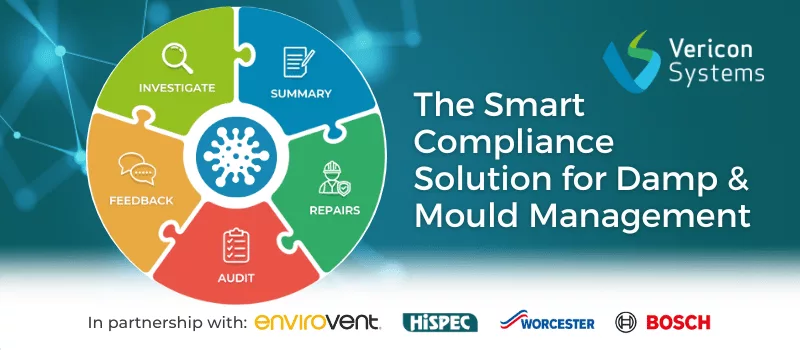
Most organisations still tackle damp and mould with a patchwork of sensors, spreadsheets and site notes. It’s slow, inconsistent, and hard to evidence. MouldSense brings everything together—continuous environmental monitoring to spot risk early, guided actions to resolve issues quickly, and an audit-ready record that shows what happened, when, and why.
Bottom line: MouldSense turns signals into a repeatable, defensible process that asset, repairs and resident teams can follow together.
A connected workflow that unifies:
Result: earlier intervention, fewer callouts, and confident reporting.
Outcome: a single source of truth across departments—no chasing spreadsheets.
One platform. Multiple signals. Prevention + proof.
In short: MouldSense gives housing teams a single, reliable way to see risk sooner, act faster, and evidence improvement—turning damp and mould management from a scramble into a steady, defensible process.
In less than a month, Awaab’s Law comes into force. For social housing providers across the UK, this marks the start of a new legal duty to act swiftly on damp and mould, with strict timelines and expectations around evidence. The countdown is real, and the challenge is significant: compliance is no longer about good intentions — it is about demonstrable action.
Awaab’s Law sets strict expectations for how landlords must deal with damp and mould hazards:
At its core, the law demands speed, accountability, and clear communication. Providers must not only resolve issues quickly but also prove every step — from first report to final repair.
Vericon Systems exists to help landlords meet these requirements without overwhelming their teams. Our MouldSense package is designed specifically with Awaab’s Law in mind. It combines:
Together, these tools give housing providers a proactive, scalable way to manage damp and mould risks while building transparency and trust with residents.
Housing providers are already seeing the impact of this approach.
Chris Roberts, Sustainability Manager at Plus Dane Housing, explains:
“Although the Vericon system has only been live for a matter of months, we are already seeing positive results. With the ability to proactively monitor, manage, and evaluate humidity levels within our properties, we can prevent the build-up of damp and mould and all of the problems they bring. Vericon’s ongoing service and support has been first class.”
At Raven Housing Trust, Vericon’s technology is forming the backbone of a proof of concept designed to scale:
“The integration of the BCM, MultiDot, and Autofill technologies has empowered us to proactively monitor and manage damp and mould risks across our properties… This partnership not only supports the spirit of Awaab’s Law, but it also strengthens our commitment to delivering healthier, safer homes.”
Michael Ryan, Head of Property Services, Raven Housing Trust
And at Clarion Housing Group, proactive monitoring is already changing resident outcomes:
“The MultiDot sensors have been a pivotal tool for root cause analysis… We have been able to identify hotspots and proactively reach out to these residents to improve their quality of life before it can become a bigger problem. The monthly reporting from the Vericon team means we can confidently identify properties of higher risk and effectively manage these cases with more transparency, all the way through to completion.”
Ross Wiles ACMI fCMgr, National Lead LCDM, Clarion Housing Group
These are not isolated examples. They represent a wider shift in the sector — from reactive firefighting to proactive management — enabled by connected technology.
With less than a month to go, the time for planning is running out. The penalties for non-compliance are serious, but the bigger risk is to residents’ health and wellbeing. Every delay, every missed inspection, and every undocumented repair creates exposure — for providers and for families.
The good news is that solutions exist today. Vericon’s MouldSense package is already in place across the UK, delivering measurable improvements in compliance, transparency, and resident trust. By acting now, housing providers can enter this new regulatory era with confidence rather than concern.
Awaab’s Law is more than legislation. It is a call to the sector to ensure that tragedies like Awaab Ishak’s never happen again. Meeting its requirements is a legal duty, but also a moral one.
The countdown is on. Don’t wait until the deadlines hit — get compliant now. Speak to our team today to see how Vericon’s MouldSense package can help you meet Awaab’s Law requirements and protect your residents – vericonsystems.com/mouldsense/
With automated reporting, photographic evidence, and date/time-stamped audit logs, Vericon makes compliance simple. Whether it’s emergency lighting, mould risk, or Legionella management, our tools give you the data you need—when you need it.
📘 Download our free guide: BREATHE EASY: A Landlord’s Guide to Awaab’s Law
If you’re still relying solely on smoke and CO alarms, it’s time to rethink your strategy. Vericon’s ecosystem offers a smarter, safer, and more connected way to manage housing risks.
👉 Explore the full ecosystem and see how Vericon can help you go beyond smoke and CO.
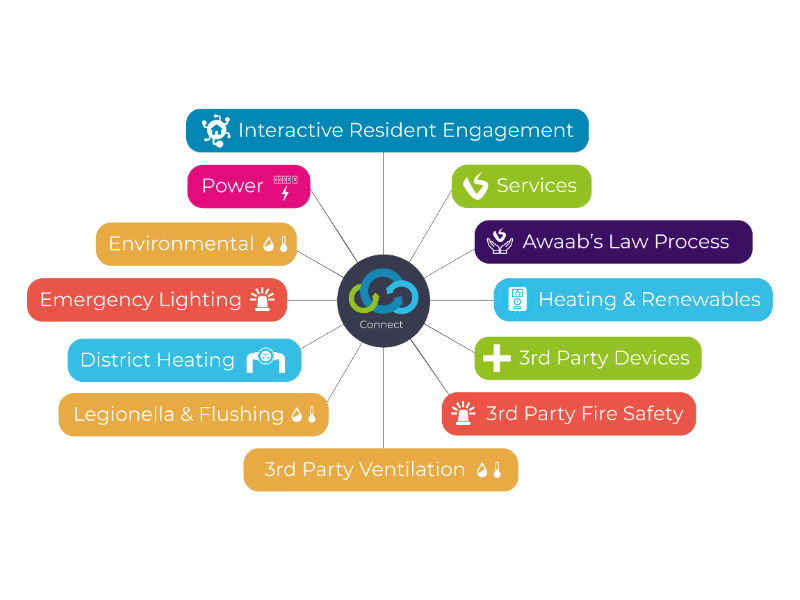

Smoke and CO alarms are no longer enough. As housing regulations evolve—especially with the introduction of Awaab’s Law—landlords need smarter, more proactive tools to protect residents and meet compliance standards. That’s where Vericon Systems comes in.
Our connected ecosystem goes beyond traditional monitoring to offer a comprehensive suite of housing compliance technology—from mould detection and power monitoring to resident engagement and Legionella risk management.
Vericon’s ecosystem is designed to help social housing providers manage multiple risks from a single platform. Each solution works together to deliver real-time insights, automate compliance, and improve resident wellbeing.
Detects early signs of damp and mould—essential for Awaab’s Law compliance.
Monitors temperature, humidity, and dew point to flag environmental risks.
Tracks power usage and identifies faults or outages in real time.
Automates emergency lighting tests and stores results for easy reporting.
Monitors district heating systems for consistent energy delivery.
Manages Legionella risk with automated temperature checks and alerts.
Displays real-time updates to residents via an in-property screen.
Ensures air quality and system performance through our partnership with EnviroVent.
Tracks performance and pressure to prevent breakdowns and improve efficiency.
Traditional alarms are reactive—they alert you after something goes wrong. Vericon’s ecosystem is proactive. It helps housing providers:
With automated reporting, photographic evidence, and date/time-stamped audit logs, Vericon makes compliance simple. Whether it’s emergency lighting, mould risk, or Legionella management, our tools give you the data you need—when you need it.
📘 Download our free guide: BREATHE EASY: A Landlord’s Guide to Awaab’s Law
If you’re still relying solely on smoke and CO alarms, it’s time to rethink your strategy. Vericon’s ecosystem offers a smarter, safer, and more connected way to manage housing risks.
👉 Explore the full ecosystem and see how Vericon can help you go beyond smoke and CO.

Awaab’s Law is moving from headline news to operational reality, with the government releasing updated draft guidance and the 2025 regulations that finally clarify what’s expected of social landlords. If you’re responsible for damp, mould, or hazard management in social housing, these changes are more than just administrative—they represent a fundamental shift in what “best practice” looks like.
Visit our Awaab’s Law Page here.
At Vericon, we know compliance isn’t just about ticking boxes. It’s about protecting residents, reputations, and budgets. Here’s how the latest updates affect you—and how we can help.
Real-Time Damp & Mould Detection:
Our analytics do more than simply flag a problem: they quantify risk and identify causality, ensuring you meet statutory requirements and put an end to recurring cases.
Automated Tracking Deadlines:
From day one, when the clock starts ticking, we create a full date- and time-stamped audit log, along with any photographic evidence captured during surveys. This validates compliance and can be included in your resident correspondence to demonstrate you are actively managing their issues.
Clear Resident Communication:
Simplify and validate your resident communication by including a date- and time-stamped audit log and any photographs captured during the process. Where HomeHub is fitted, this communication and future updates can be accessed via the in-property 7-inch screen.
Guidance and Best Practice:
Our Awaab’s Law landing page and BREATHE EASY guide break down the rules and provide practical, actionable steps for your team.
The Rule:
Inspect any reported or detected hazard within 10 working days.
The Risk:
Tighter timescales increase the risk of missed or late inspections and regulatory breaches.
How Vericon Helps:
Let us take control from day one. Our real-time damp and mould risk management uses causality analytics and photographic evidence to pinpoint the cause of risk—often before a resident needs to complain. Automated workflows schedule and track inspections the moment an alert is raised, ensuring you never miss a regulatory deadline. After your investigation, you’ll have the data and evidence to provide a clear summary of findings to the resident.
**By October 2025, you’ll need systems that can triage risk, schedule and track every inspection, and securely store evidence and notes from every visit.**
The Rule:
Repairs must start within 5 working days of confirming a health-related hazard.
The Risk:
Shorter timescales make contractor coordination and documentation business-critical.
How Vericon Helps:
Our platform logs all confirmed hazards and instantly notifies your maintenance teams. Progress—including photo evidence and install updates—is tracked on a central dashboard, providing real-time validation of work completed. No more “slipped through the cracks”—your teams have instant access to the data they need to keep repairs on track.
**By October 2025, you’ll need systems that track repairs, store photographic evidence, and maintain a full repair history—ready for audit at any time.**
The Rule:
After any inspection, you must provide a written summary to the resident within 3 working days.
The Risk:
Communication failures are now compliance failures.
How Vericon Helps:
Vericon captures and organises all inspection findings, next steps, and timescales in clear, exportable formats—so you can create your written summary with ease. All inspection content and findings are shared with the housing provider via a Vericon report and available on your online dashboard. This information can be shared with residents, ensuring they’re kept updated and know how to stay safe.
**By October 2025, you’ll need to generate plain-language resident reports within 48 hours and log all resident communications.**
The Rule:
Emergencies require attendance and action within 24 hours.
The Risk:
There is no margin for error—delays create immediate risk for residents and your organisation.
How Vericon Helps:
Our 24/7 monitoring flags emergencies in real time. Escalation protocols alert your response teams instantly, with incident logs, quantified risk ratings, and timestamps ready for audit or legal defence. Crucially, our causality analytics identify the root cause—helping you prevent repeat issues.
The Rule:
Where works can’t begin within 5 days due to structural complexity or access, they must commence within 12 weeks.
The Risk:
Ambiguity around “complex works” puts the onus on robust documentation and transparent processes.
How Vericon Helps:
From the moment complex work is identified, real-time monitoring provides pre- and post-works data—validating progress and completion. Every case is fully logged, with all communications, actions, and scheduled works stored securely in one place. This information can be shared with residents, ensuring they’re kept updated and know how to stay safe.
**By October 2025, you’ll need to store full case records—including evidence, communications, and follow-up—securely for at least six years.**
Recent analysis from Clyde & Co highlights the impact: for the first time, the law sets enforceable timeframes for resolving hazards in social housing, with penalties for non-compliance. Residents can now bring claims for breach of these legal duties, and landlords will need to prove not only that hazards were addressed, but that every step—from investigation to communication—was done on time and by the book.
Our technology is built for the future—giving you the tools, data, and evidence to not only comply, but to lead on safety and resident engagement.
Explore our Awaab’s Law landing page and download the BREATHE EASY guide to get ahead of the changes.
Ready to talk about a compliance solution tailored to your portfolio? Contact Vericon today.