




A damp and mould inspection can be an important part of a landlord’s response. But it is still only one moment in time. A surveyor may attend,...
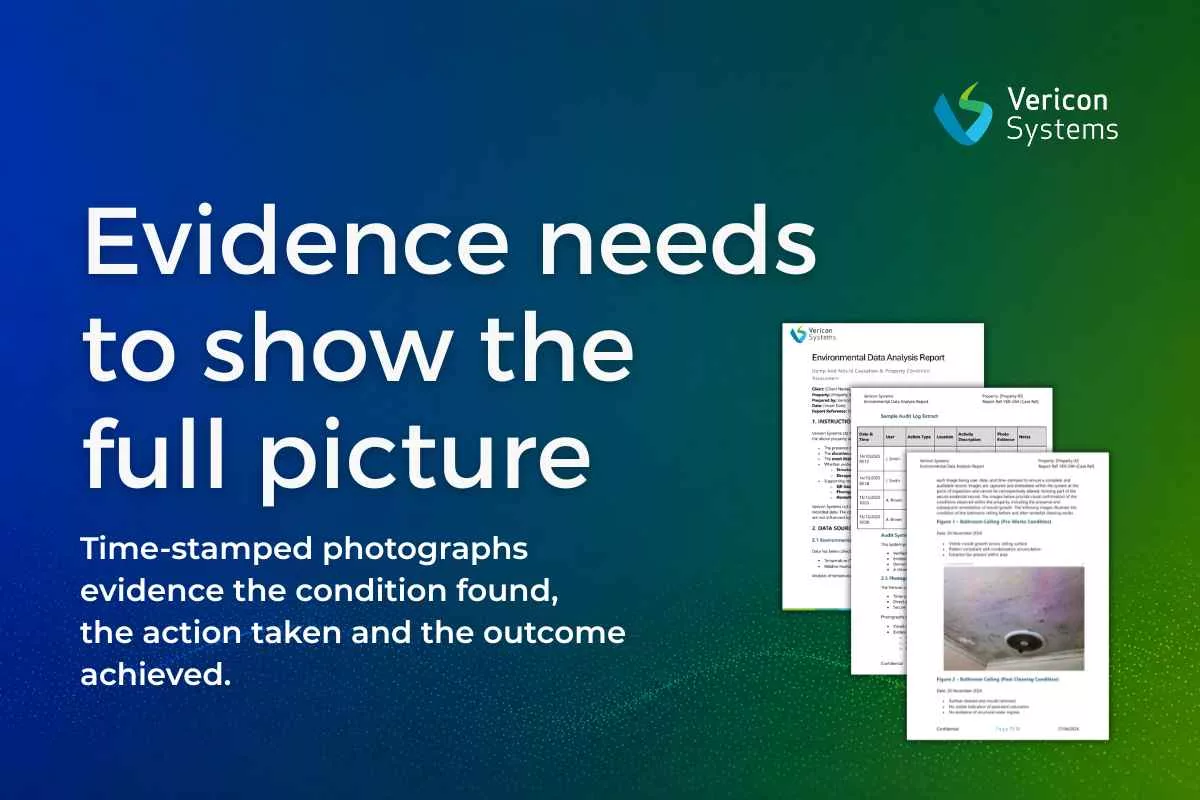
Why Damp and Mould Evidence Breaks Down After the Inspection
read more...
See all case studies
Magenta Living wanted a clear, evidence-led way to understand and reduce damp and mould risk in a live home—moving beyond one-off inspections and reactive responses. At the property (a 3-bedroom house with 4 occupants and a pet), an EnviroVent survey highlighted condensation risk factors and ventilation constraints, including limited natural ventilation in multiple rooms. To build a defensible baseline and prove whether targeted improvements would work, Magenta deployed the Vericon ecosystem in-property.
A Vericon BCM device was connected to the boiler and used as the in-home gateway, enabling continuous data capture across both environmental conditions and heating performance. Four Vericon MultiDot temperature and humidity sensors were installed across key rooms: kitchen, bathroom, bedroom 1 and the dining room. This set-up created a continuous view of humidity patterns and the conditions most associated with condensation, damp and mould escalation—while also providing crucial context from boiler telemetry (including central heating flow/return temperatures, domestic hot water flow, system pressure and boiler modulation). In practice, this helps teams separate “ventilation-led” issues from heating behaviour, under-heating, or system performance problems and supports faster triage and more targeted interventions.
EnviroVent then installed Infinity extract fans in the kitchen and bathroom on 13 November. Vericon monitoring continued throughout November, enabling a direct before/after comparison of performance. The results showed a clear step-change improvement in humidity conditions after installation. Average bathroom humidity reduced from 65.70% to 51.85% (a 13.85 percentage point drop, ~21% reduction). Average kitchen humidity reduced from 67.04% to 52.29% (a 14.75 percentage point drop, ~22% reduction). The most defensible proof point was risk frequency: days where average humidity was at or above 65% fell to zero post-install in both rooms (bathroom: 8 of 13 days pre-install to 0 of 17 days post-install; kitchen: 11 of 13 to 0 of 17). These reductions were recorded despite average room temperatures falling by around 1°C post-install—conditions that would typically increase condensation risk—strengthening confidence that the improvement was intervention-driven.
This case study demonstrates the difference between installing products and operating an evidence-led property management model. Vericon enables landlords to identify risk early, prioritise interventions based on measurable need, verify outcomes after works, and maintain an audit-ready evidence trail aligned to damp and mould governance expectations, including Awaab’s Law. It also creates a platform for expansion beyond this initial use case—supporting resident engagement through HomeHub, heating assurance, and wider property intelligence across the Vericon ecosystem.
Would you like to find out more information about how
Vericon Managed Services could work with your business?
Would you like to find out more information about how we can Vericon Managed Services could work with your business?